Skip links

Production

⁠Every piece of a Septemar interior is produced in our own facility in Gebze — machined, veneered, finished, upholstered, pre-assembled and inspected before it goes on board.

Skills that are grown,
not bought

⁠The skills our work requires cannot simply be hired. We train apprentices in-house alongside experienced craftsmen, document every role with a job description and required competences, and authorise people individually for critical processes.

Quality control
at every stage

⁠Quality is checked where defects are created, not only at the end. Incoming materials are inspected against specification; parts are checked after machining, veneering and finishing; furniture is pre-assembled and inspected before dispatch; and our field quality controls continue on board until handover.

Challenging, but Possible

⁠Boutique production means that almost every project brings something we have not made before: a curved staircase clad in mirror strips, a 1932 interior without a single cross-head screw, onyx treads lit from within. We treat each of these as a chance to improve. We follow new materials and technologies closely, test them in our own R&D work and bring what works into standard practice — which is how CAD/CAM integration, an automated finishing line and digital nesting became part of our everyday production.

Planning with Data

⁠With Septemar MIS, our management information system, we have turned years of project experience into data — and that data into our plans. We know how long a piece of furniture takes in each department, which skills it requires and where the bottlenecks are. Each piece is planned along its entire journey, from engineering to the moment it is installed on board, so that schedules are realistic from the start and progress can be measured against them.

Where technology and craftsmanship meet

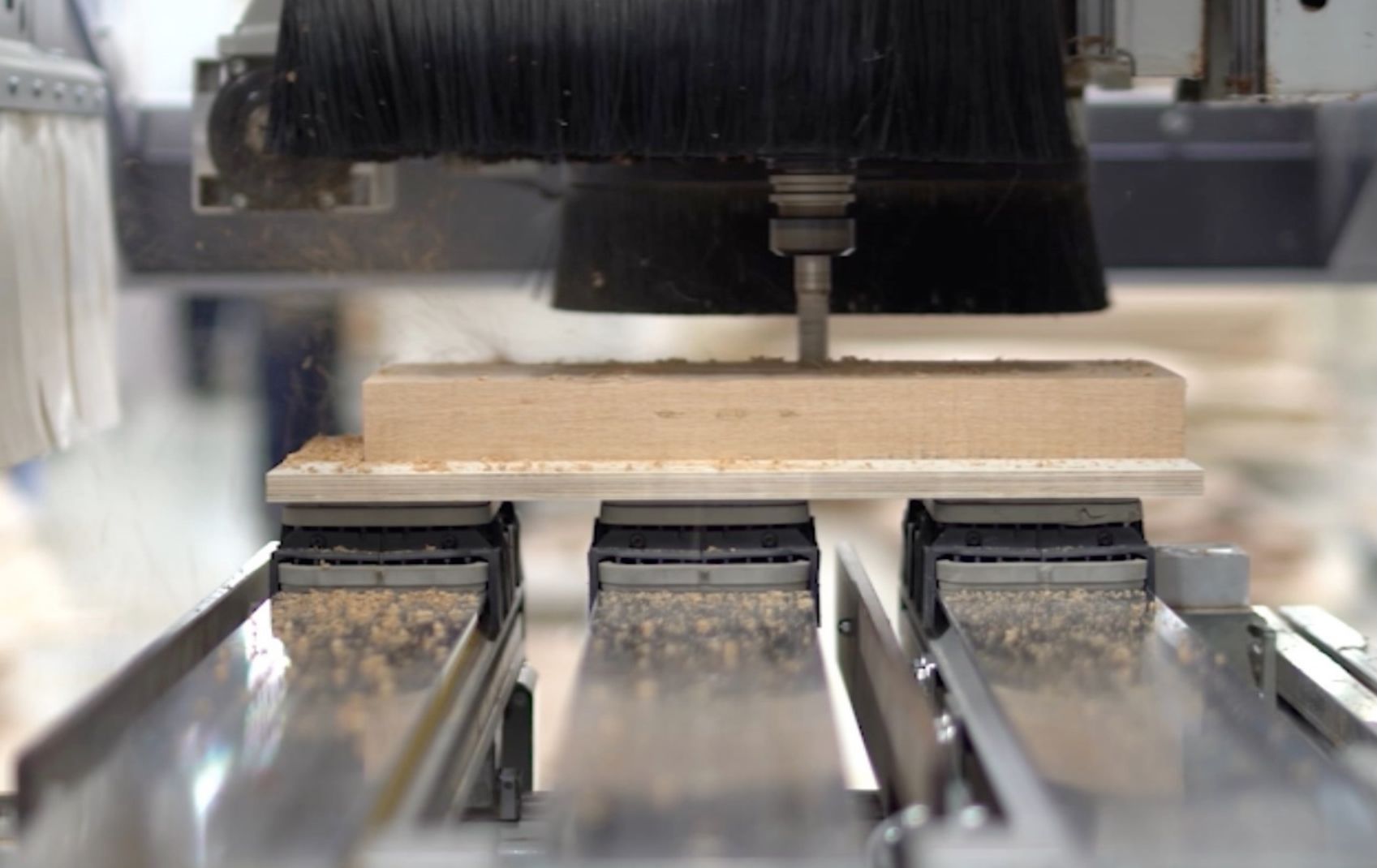
Machines give us speed and repeatable precision; experienced hands give an interior its character. We use both deliberately. CNC machining, nesting and automated finishing handle what must be identical and exact. Veneer matching, hand finishing, upholstery and final fitting are done by craftsmen who have spent their careers in yacht joinery and who are training the next generation alongside them.

Finishing:

automated where it helps, by hand where it matters

Since 2023, lacquer and paint are applied on an automated spray line with integrated UV drying, which gives us consistent film thickness, shorter cycle times and cleaner surfaces. Where a project calls for traditional methods, we return to the hand: on Cacouna, solid mahogany panelling was French-polished by hand, exactly as it would have been in 1932.

⁠Dust-controlled

production

On high-gloss lacquer, a single particle of dust is a visible defect. We organised our facility to control dust at source — separating machining from finishing, extracting dust at the machine and keeping finishing areas clean. Fewer defects mean less rework, more consistent surfaces and better working conditions for our teams.

⁠A fully integrate

facility

All production stages take place under one roof, each with its own specialised team and equipment:

• Pre-manufacturing — panel sizing, CNC machining, veneer splicing, pressing and edge-banding

• Pre-assembly — furniture assembled and checked before it leaves the factory

• Finishing — calibrated sanding, automated spray lacquering with UV drying, and hand finishing

• Upholstery — leather and fabric cutting, stitching and panel upholstery

• On-board assembly — our own teams install and finish the interior on the yacht

The same capabilities also serve high-end residential and hospitality projects where yacht-level quality is required.

Explore
Drag